ROLE: Director, Builder & Experience Designer
TIMELINE: 11 Months / Summer 2018 - Spring 2019
ADVISORS: John Dessler, Richard Pell & Isabelle Strollo
TEAM: Adelaida Viramontes Apostol, Xavier Apostol
LENGTH: 12 - 15 Minutes
EXHIBITIONS & AWARDS:
Open Studios 2018: Under Construction / College of Fine Arts / December 2018
Senior Class Art Show: Bounce! / Miller Institute of Contemporary Art / May 3rd, 2019
Meeting of the Minds 2019 / Carnegie Mellon University / May 8th, 2019
Artistic Excellence Award presented by engineers in support of the arts and
The Center for the Arts in Society (CAS) at Carnegie Mellon University
Please contact me at xavier@apostol.org if you’re interested in receiving an executable.
ORCHARDS is a virtual reality documentary that follows the life of my grandmother, Adelaida Viramontes Apostol, between Mexico and the United States.
Over the summer of 2018, I was fortunate to be working back home in Arizona. This meant that I spent most of my off-time with family, especially with my grandmother Adelaida, also known as Nana. Our visits were short but frequent: they usually involved me helping her complete errands around town or us going out to lunch. With the separation of families happening close to our home and border tensions continuing to escalate, we often talked about what it meant to be a Mexican in today’s world and the events that had brought her to the States.
For Full Documentation:
PROJECT BACKGROUND
The primary focus of Orchards was to create a storytelling experience which could combat the stereotypes of Mexican people created by mass-media and people in positions of power. This project aimed to spark discussion around the life of immigrants, bringing into mind those stories which participants may already be familiar with (i.e. - stories from parents, grandparents, uncles, aunts, etc.).
This project was also made in response to the continuously rising border tensions between Mexico and the United States. At the height of these tensions, when families were being separated by President Trump’s “zero tolerance” immigration policy, I decided to turn to someone who had lived on both sides of the border - my grandmother. She had always wanted her story to be told and now seemed like the right time.
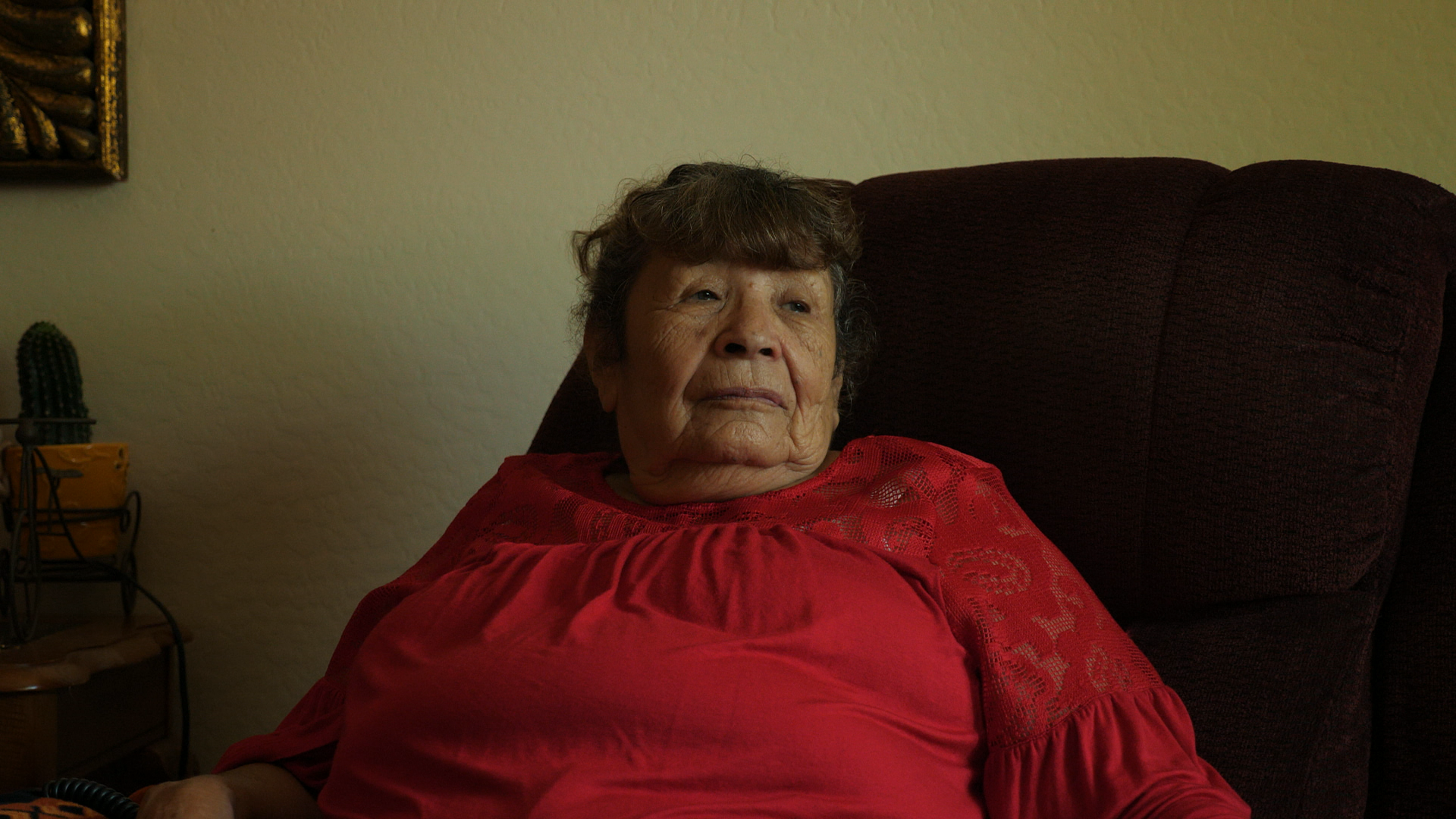
Nana Reflecting on Her Childhood
We began weekly meetings to discuss the events of her life, continuing to bring to mind these memories until she felt comfortable with recording. At the point which she felt prepared, we began documenting - recording two pass-throughs of her life, just in case anything was missed in the first round. These recordings were finally completed in January of 2019.
This project was not intended to be developed in a 360 medium. However, after a growing personal interest in game engines and realizing their potential in storytelling, I began to discover how real-time animation could change the way people experience stories. Empathy experiences, ones which the audience are placed in the subjects shoes to enlighten perspective, were of particular interest to me. I wanted viewers to feel the events my grandmother lived through, not just see them happen. I had looked into 360 experiences like Notes on Blindness by Colinart, La Burthe, Middleton & Spinney and Tokyo Light Odyssey by WOW. These two experiences really inspired me to work in 360 space, more specifically virtual reality, because they created such immersive worlds with complex visuals and vignettes, yet were still able to tell a story through simple and meaningful sound.
DESIGN OVERVIEW
Orchards was designed to primarily be a one-on-one experience. The stories (audio recordings) would only be accessible to the participant wearing the headset, but the visual feedback was open to whoever passed by via projection or a monitor. I really wanted a personal relationship to develop between my grandmother and the participant driving the experience, and also wanted to create some interest for those watching the visuals, enticing them to hear her stories.
I refer to the participant wearing the headset as the driver because they become a catalyst for my grandmother’s story the moment they start the experience and make it visually accessible to those nearby. Regarding the relationship between my grandmother and the driving participant, it's important to note that the participant does not “play” as her, but rather is guided by her, assuming their own identity throughout. This hits on another interest of mine, which is storytelling by word of mouth. This project got me thinking a lot about how we project our own visuals and ideas of space on other people’s stories, and I think that connects well with my goal to get people thinking about the immigration stories they already know.
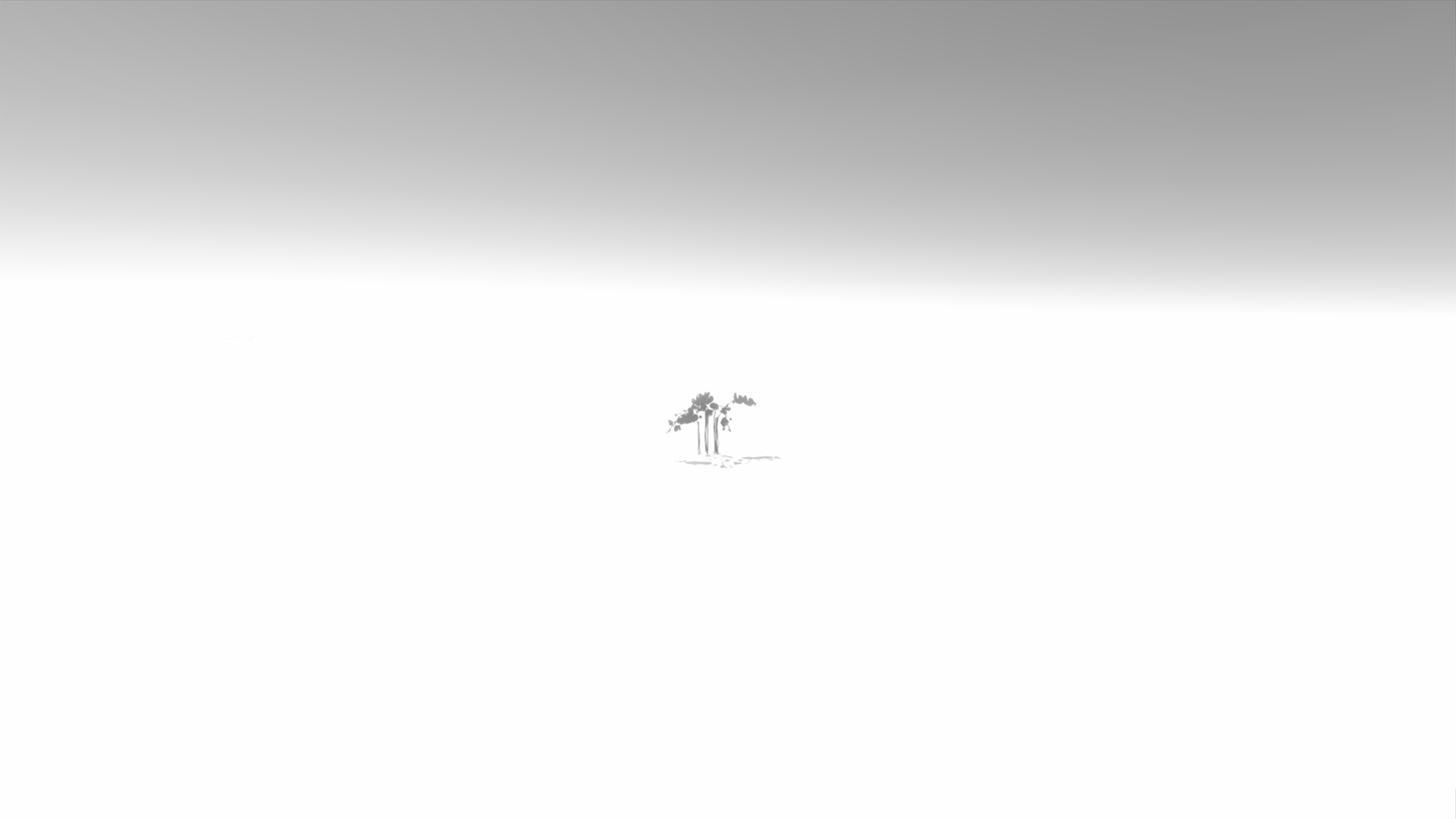
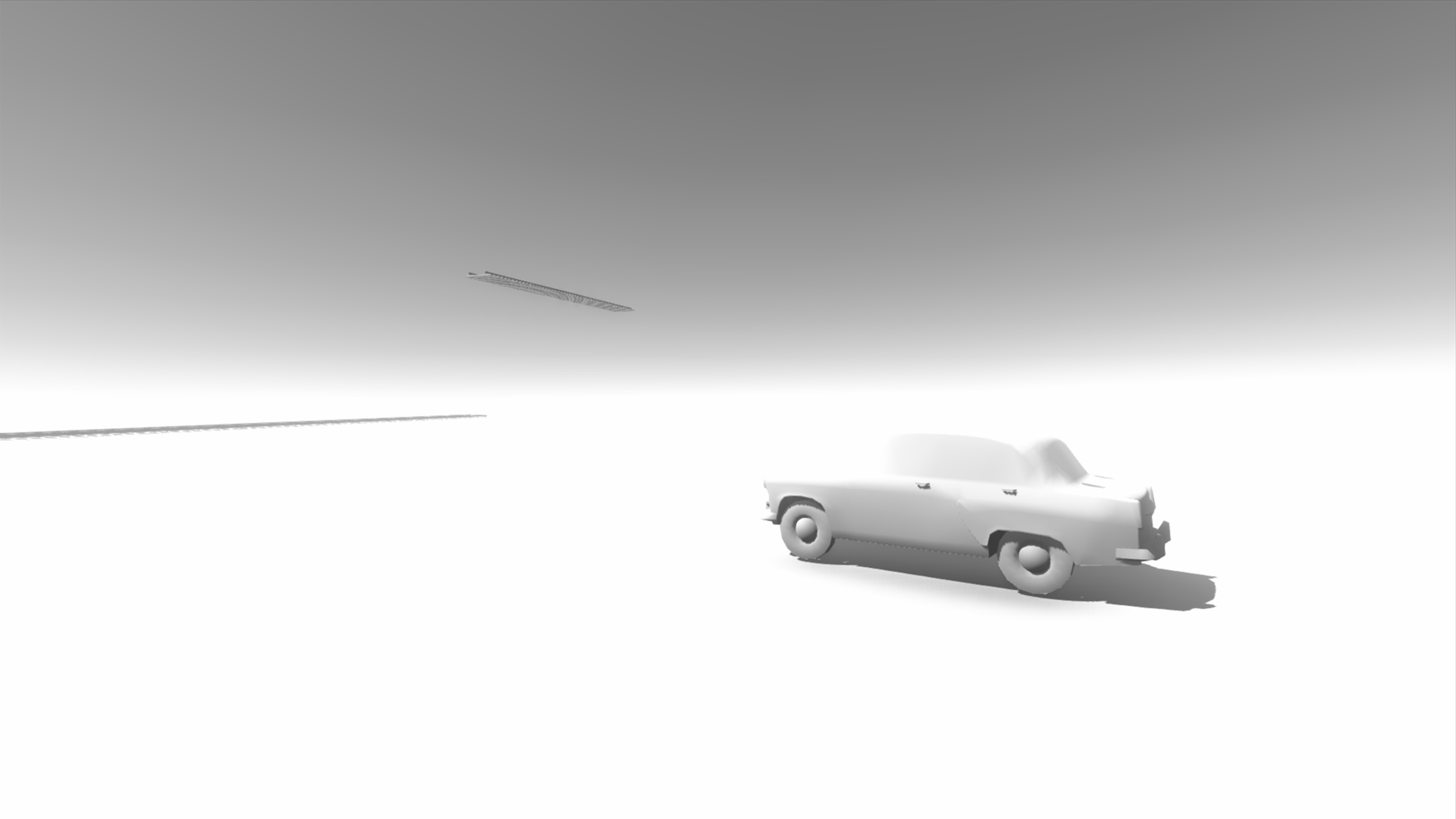
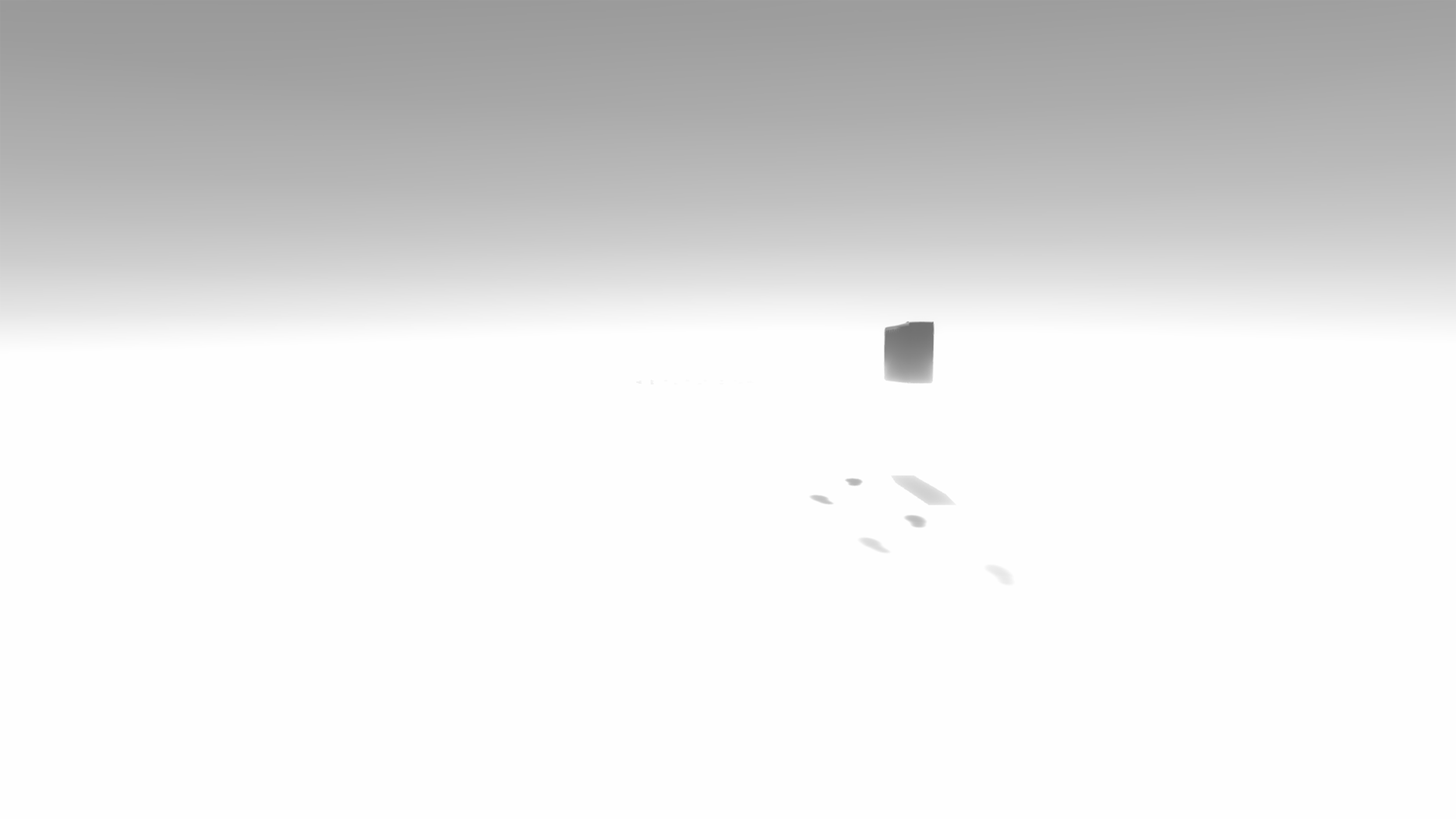
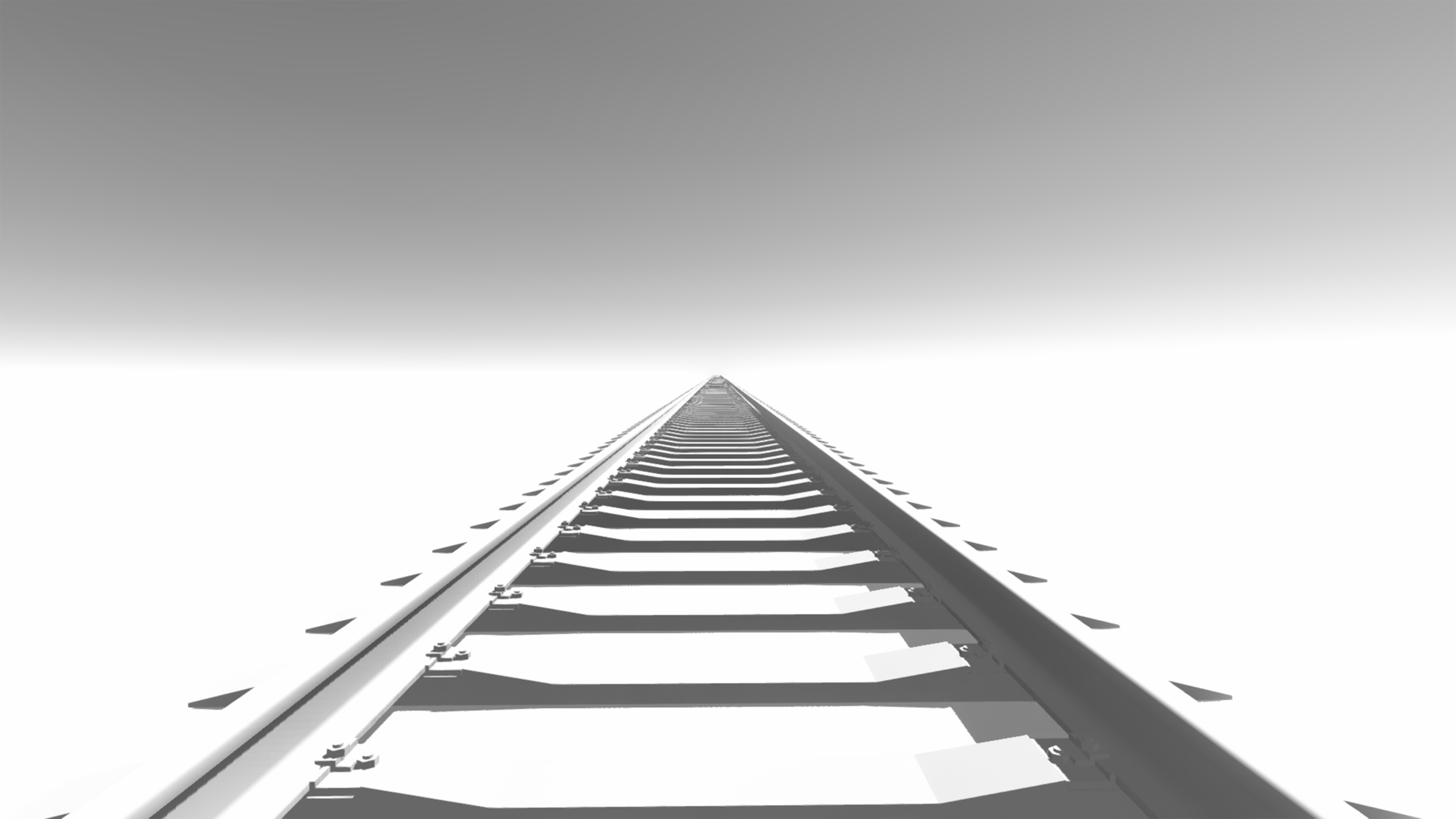
Images from The Prologue Section
Regarding the art style, I wanted to reflect the intimate and imaginative nature of word of mouth storytelling and memory space. I utilized minimalist assets and gray-toned environments indicative of desert landscapes. I wanted to give participants just enough visual clues so that they could make out what the object or space was, but also take away specificity so that they could project their own ideas based off of stories they already know.
PROCESS OVERVIEW
Interview By Ashton Jones, Ellan Suder, and Rachel Shin
After my grandmother and I had finished recording, I was left with about eight hours of content. Each session included detailed notes on stories to include in Orchards. After thorough review and further conversations with my grandmother, we decided to include five stories.
I had approached the completion of the project by individual stories, dedicating time to editing audio interviews, creating asset sheets, creating animation sheets, implementing triggers and animations, play testing, and adding any finishing touches. I created a few google sheets to help organize myself throughout the process and to make sure that I was hitting my deadlines.